The health guidance below draws on university veterinary resources linked at the end. It is general information, not individual veterinary advice. Good Dog Grooming shares practical coat-care guidance and local area information. Equipment descriptions and planning questions are educational, not a list of services, equipment or qualifications we currently offer.
What can dog grooming include?
Grooming is a broad term. Depending on a dog’s needs and the service offered, an appointment might include brushing, bathing, drying, coat trimming or nail care. A “wash” and a “full groom” are not necessarily the same package, so ask what is included before booking.
A useful consultation starts with the individual dog: coat type, how the dog responds to handling, any previous grooming difficulties and relevant veterinary advice. A service menu should help you understand what you are buying, rather than leave those details until arrival.
How often should you wash a dog?
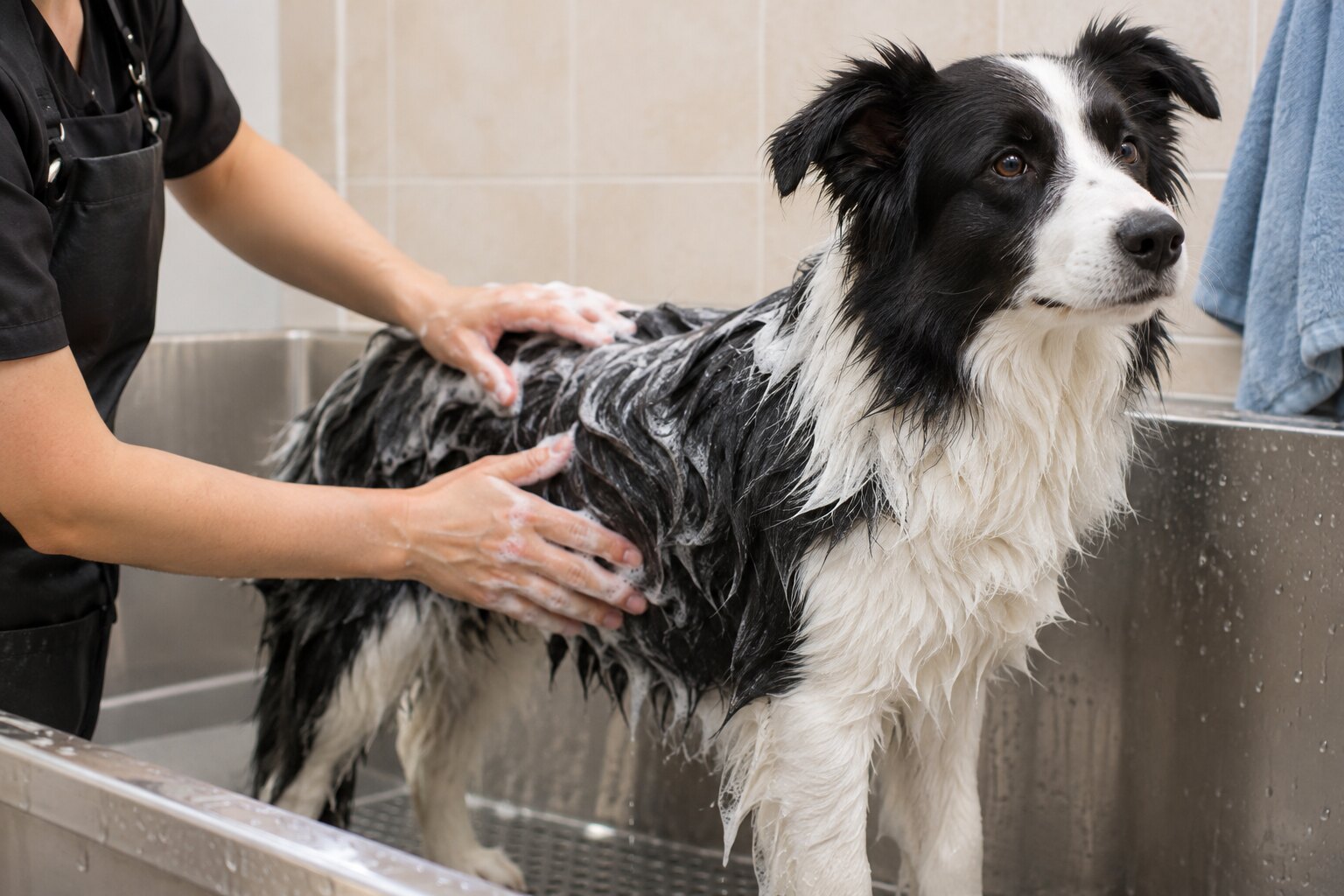
There is no single bathing timetable that suits every dog. Virginia Tech Veterinary Teaching Hospital advises considering the individual animal’s needs. Coat, activity and skin condition can affect the right routine.
Tell your groomer about your dog’s usual routine and any skin concerns. If your vet has recommended a particular shampoo or bathing schedule, discuss that before an appointment. A general grooming guide should not replace that individual plan.
Read Virginia Tech’s safe bathing guidanceWhat does a careful bath involve?
Choose a suitable product.
Use a shampoo made for pets and follow its directions. If your dog has a skin condition, ask your veterinary team which product is appropriate.
Work gently.
Gentle application matters. Share any sensitivity or handling concerns with the groomer before bathing starts.
Rinse thoroughly.
Virginia Tech includes thorough rinsing in its safe bathing advice. Product instructions and the dog’s individual needs should guide the process.
Dry thoughtfully.
Drying is part of the bathing process. Ask how your groomer will dry and supervise your dog, especially if the dog is nervous about noise or airflow.
These are care principles, not a promise that bathing will treat an illness, stop allergies or solve persistent itching.
What equipment might you see?
The exact setup varies between salons, vans and trailers. Useful questions matter more than impressive equipment names. The examples below describe common categories to ask about, not equipment Good Dog claims to own.
- A bathing area
- Ask how the dog enters and stands safely, how water temperature is managed and how the area is cleaned between appointments.
- Brushes and combs
- Ask how tools are chosen for your dog’s coat and how they are cleaned. Different coats can need different handling.
- A grooming table
- Ask about safe access, supervision and how the dog will be supported during handling. Let the groomer know about mobility or behavioural concerns.
- Drying equipment and towels
- Ask about the drying method, heat, noise and supervision. A dog’s response to the equipment should be part of the conversation.
- Clippers, scissors and nail tools
- If these services are included, ask who performs them, what training they have and how the proposed finish suits your dog’s coat and condition.
- Mobile utilities
- A mobile operator should explain any parking, access, power or water requirements before the visit, as well as how the working area is kept clean.
Good trust starts with clear answers.
Photos can show a business’s style, but they do not verify qualifications, insurance or care standards. Look for information you can check, and ask questions directly.
- Who will groom my dog? Ask about the person’s relevant training and experience.
- What is included? Confirm the service, expected duration, price and any possible additional charges.
- How are nervous dogs handled? Ask how the groomer responds if a dog becomes uncomfortable or cannot safely continue.
- What should I share beforehand? Mention relevant health concerns, mobility needs and previous reactions to grooming.
- What happens if there is a problem? Ask about emergency arrangements, insurance and the contact process.
- Are the reviews and photos genuine? Real customer feedback should be clearly distinguished from illustrative brand images.
These questions are not a certification scheme or a guarantee of a particular outcome. They are a practical way to make the conversation more useful.
Before a mobile grooming appointment
A mobile service brings its workspace to a location agreed with you. It does not automatically mean every address is suitable. Before booking, check the operator’s confirmed service area and ask about access and parking.
Confirm the practical details.
Ask about arrival windows, safe parking, any power or water needs, who must be present, how payment works and the cancellation policy. Share any access restrictions ahead of time. Get the actual requirements from the operator rather than assuming every van or trailer works the same way.
Good Dog’s service areas, equipment, prices and booking arrangements will be published when confirmed. Explore Good Dog grooming.
When is it a question for the vet?
Inflamed skin, sores or ongoing irritation need veterinary advice. Repeated bathing is not a substitute for finding out why a dog is uncomfortable. Virginia Tech and Texas A&M both emphasise adapting hygiene to the animal and seeking appropriate guidance for skin needs.
If your dog is being treated for a condition, tell your groomer about the care instructions relevant to the appointment. Do not ask a grooming service to diagnose a health problem or change prescribed treatment.
Sources & further reading
The university resources support the bathing and health guidance. The equipment and appointment sections are practical questions to ask an operator, not a statement of university-approved standards.
- Virginia Tech Veterinary Teaching Hospital: Safe bathing practices: Protecting your pet’s skin, 22 January 2026.
- Texas A&M College of Veterinary Medicine: Proper Pet Hygiene.
No university affiliation or endorsement of Good Dog is implied. This article does not replace advice from your own veterinary team.